jp.pb.sis– Author –

-

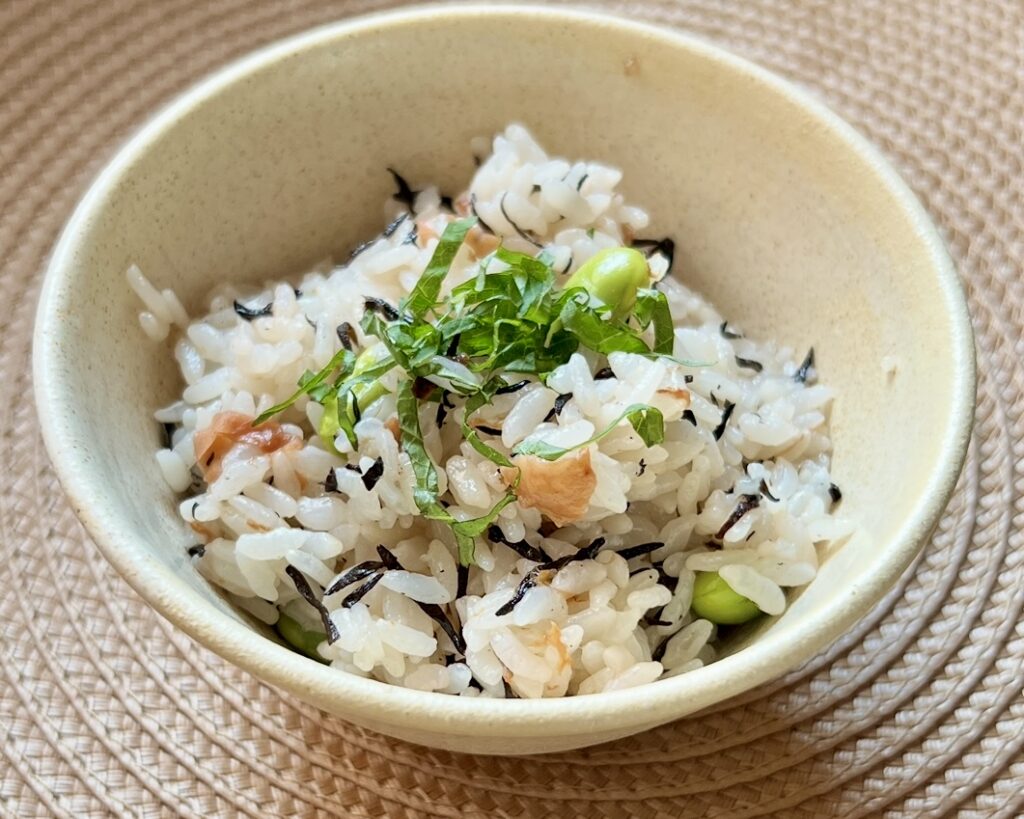
Hijiki and Ume(Plum) Takikomi Gohan
Hijiki and Ume Takikomi Gohan is a fragrant Japanese mixed rice dish made by cooking rice together with hijiki seaweed and salted ume plums. The savory flavor of the seaweed blends beautifully with the refreshing tartness of the ume, cre... -
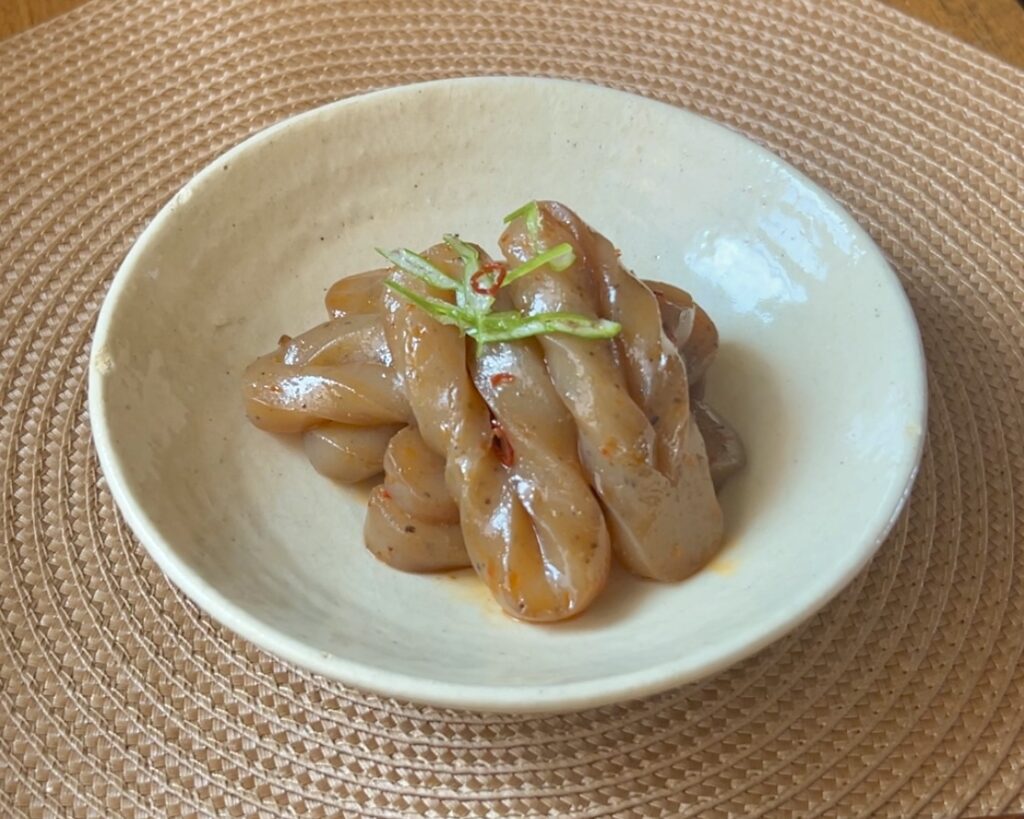
Konnyaku stir fry
Konnyaku is a chewy, low-calorie Japanese food made from the konjac root. In this stir fry, it’s cooked with sesame oil, soy sauce, mirin, a little sugar, and spicy doubanjiang for heat. Topped with sesame seeds and green onions, it’s a ... -
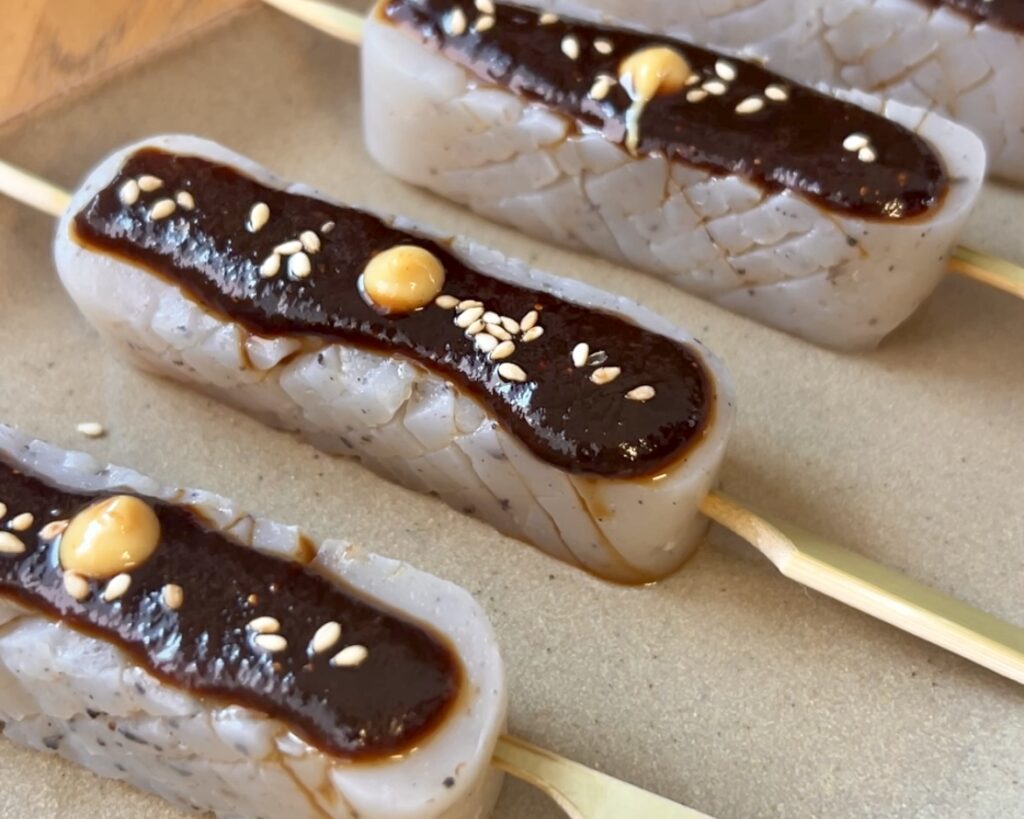
Konnyaku with Dengaku Miso Sauce.
Konnyaku is a traditional Japanese food made from the konjac root almost zero calories, yet full of flavor. Grilled until slightly crisp, then topped with a sweet-savory miso sauce, sesame seeds, and spicy Japanese mustard, it’s a health... -
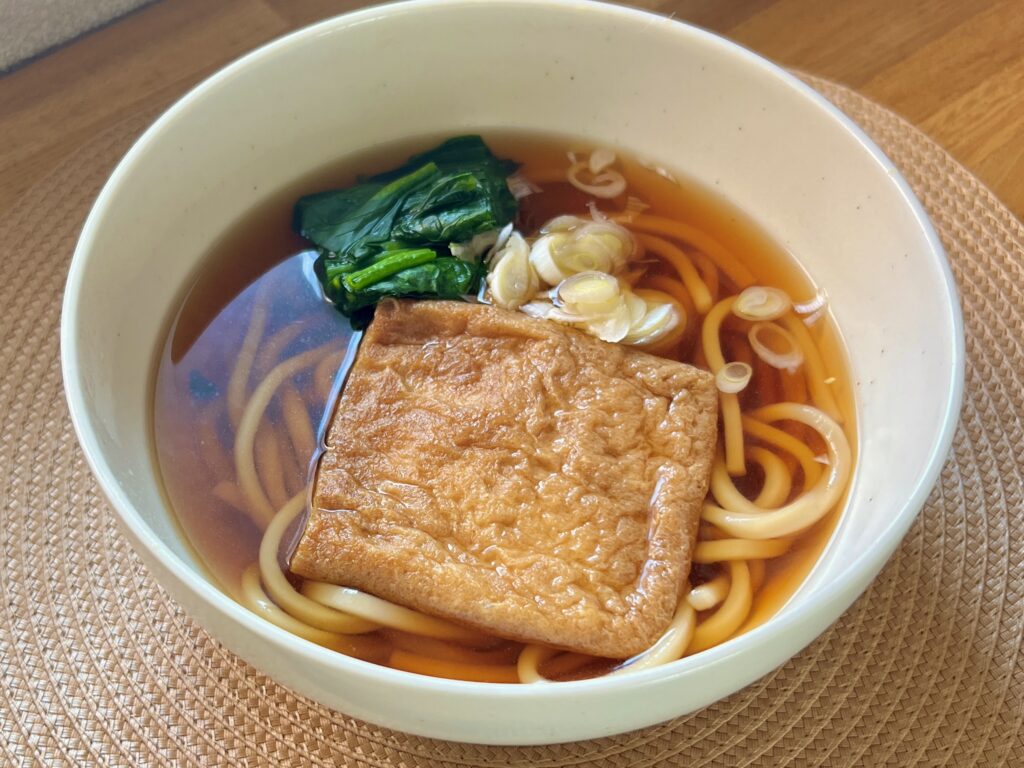
Kitsune Udon
Kitsune Udon (きつねうどん) is a Japanese noodle soup with thick udon noodles in a savory broth.It’s topped with sweet simmered aburaage (fried tofu pouch), said to be a fox’s favorite food.The name “kitsune” means fox in Japanese.Simple... -
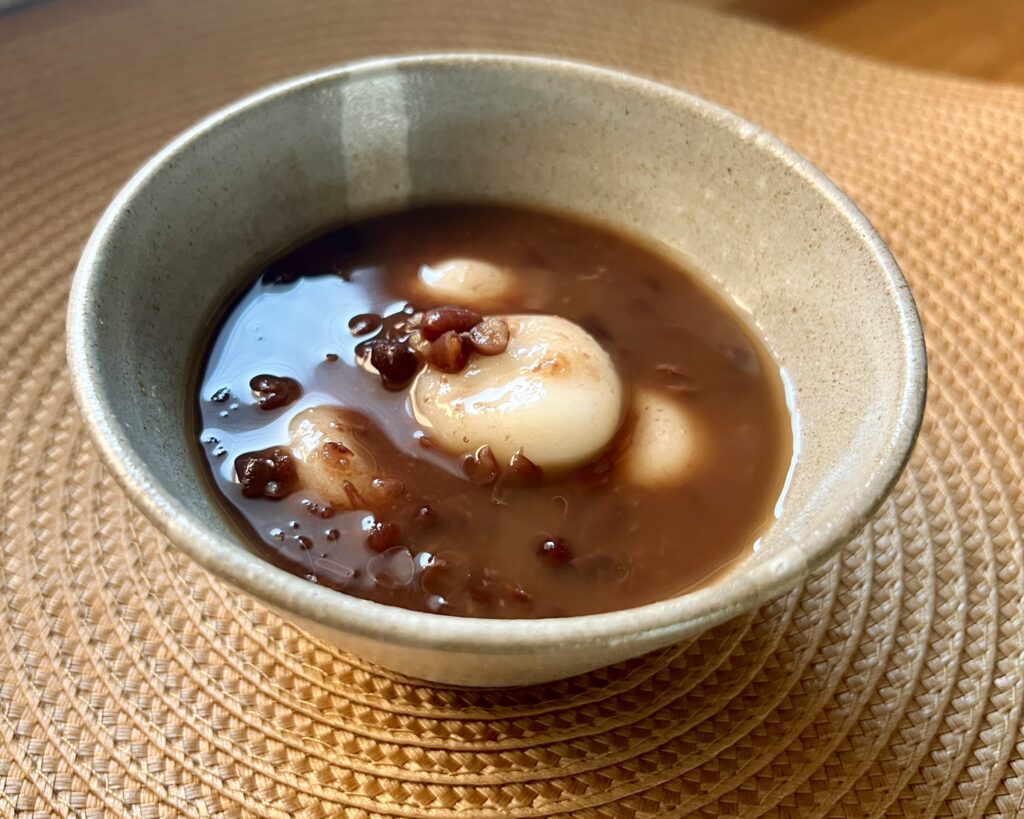
Shiratama zenzai
Shiratama Zenzai is a traditional Japanese dessert made with soft rice flour dumplings (shiratama) served in a warm or chilled sweet red bean soup.It’s comforting, slightly sweet, and loved for its chewy texture and rich flavor. Perfect ... -
Essential Seasonings for Japanese Vegan Cooking
Japanese cuisine is built on a balance of flavors — salty, sweet, sour, bitter, and umami. When you're cooking vegan Japanese food, seasonings are key to creating depth and authenticity. The good news? Many traditional Japanese seasoning... -
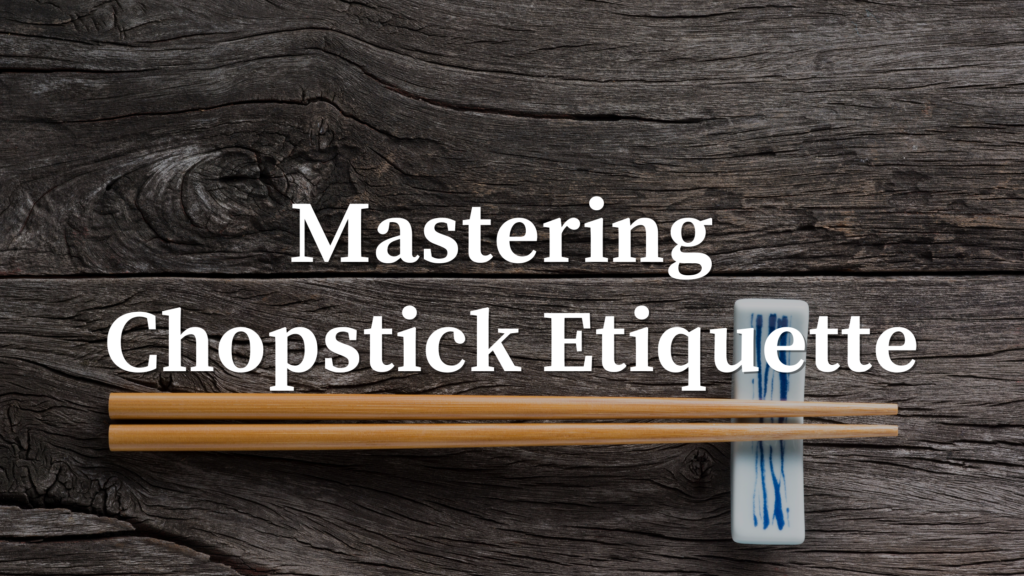
Mastering Chopstick Etiquette
Chopsticks are a daily part of dining in Japan — not just tools, but part of a culture that values care, cleanliness, and respect.Here are some simple do’s and don’ts to help you use chopsticks confidently and politely during your time i... -
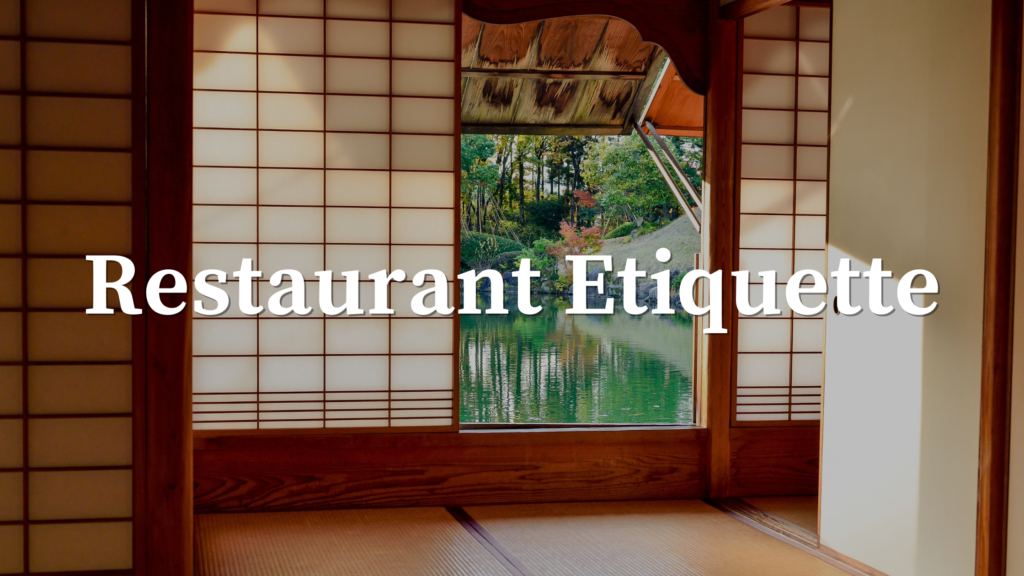
Restaurant Etiquette in Japan
What to expect when dining out in Japan, from entrance to payment. Dining in a Japanese restaurant is often a calm and polite experience. Understanding a few local customs can help you feel more comfortable and make a great impression. 1... -
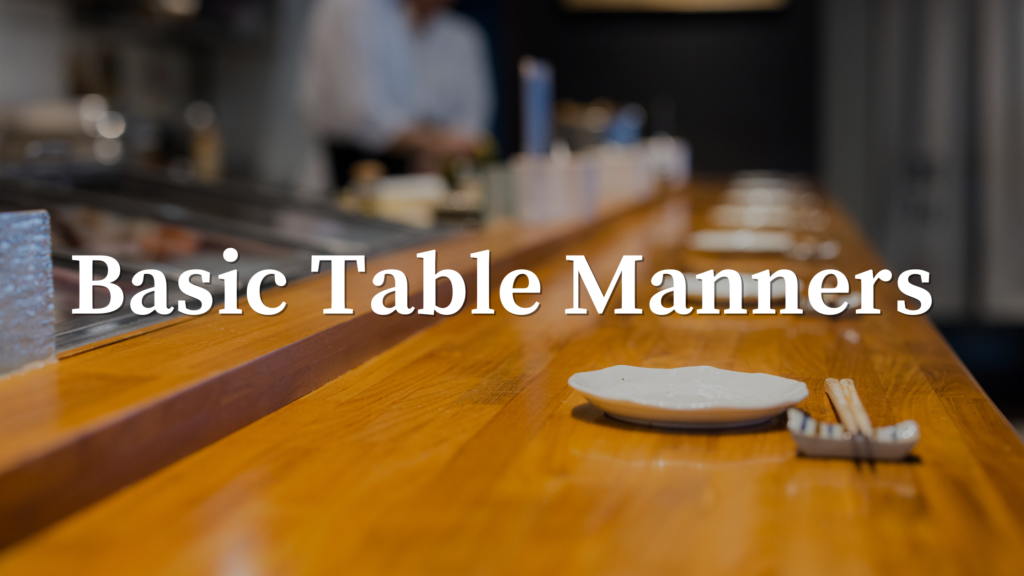
Basic Table Manners in Japan
Simple dining customs to help you feel at ease and show respect during your meals in Japan. 1. Express Gratitude Before and After Meals Before eating, say “Itadakimasu” (I humbly receive).After finishing, say “Gochisousama deshita” (Than... -
Vegan Certification Logo in Japan: What It Means & Why It Helps
"How can I tell if something is vegan in Japan?""Everything’s written in Japanese… how do I know what’s safe to eat? If you’ve had those thoughts while shopping or traveling in Japan, you’re not alone.But here’s some good news: Japan has...